◎
Demand prediction
chark models the energy behavior of every zone and vehicle, and gets sharper with every session.
How it works
chark reads each zone, predicts what it will need, and keeps it charged ahead of demand. The hardware is the engine. The intelligence is the product.
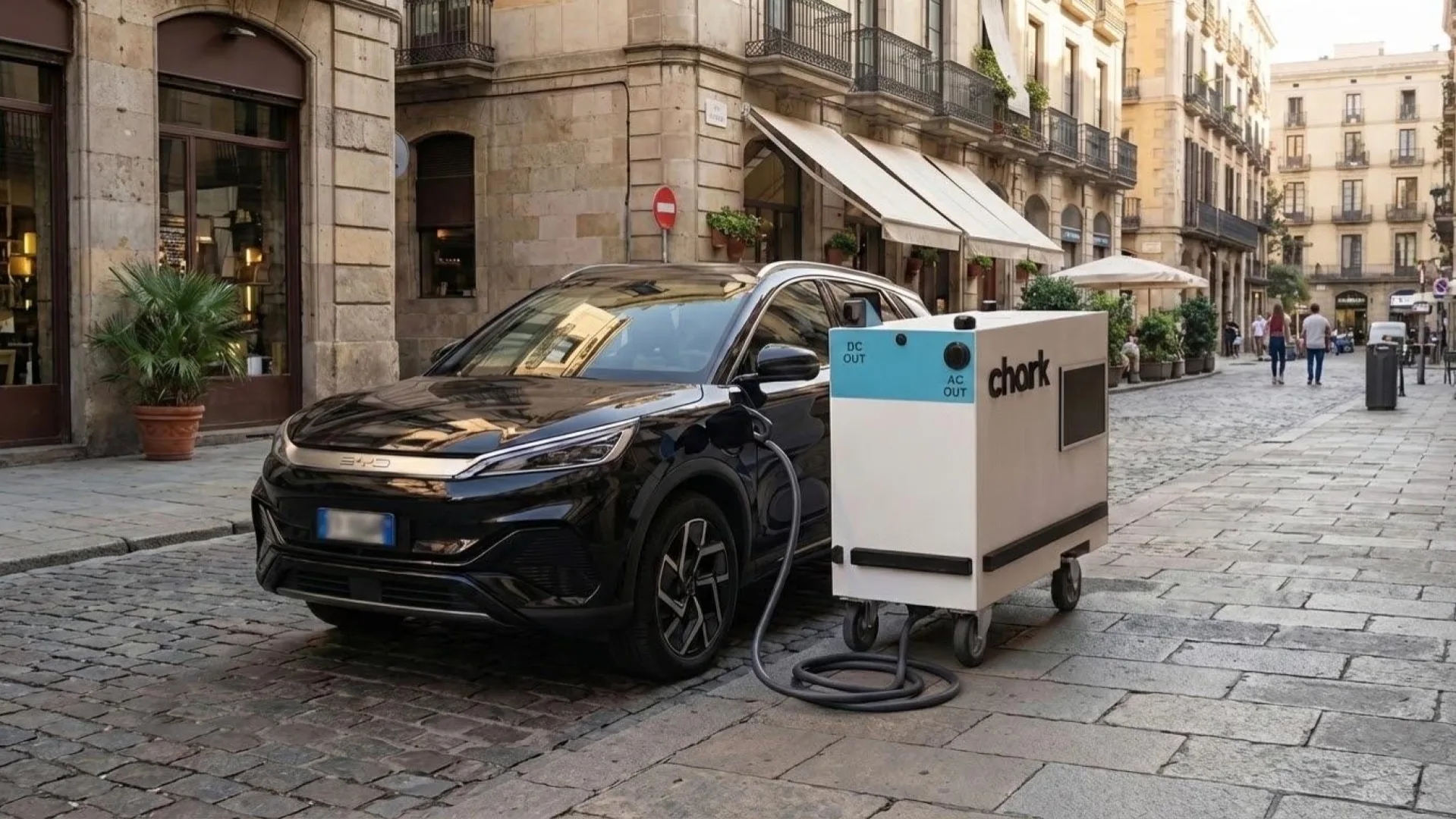
chark models the energy behavior of every zone and vehicle, and gets sharper with every session.
It keeps each zone charged ahead of demand, setting timing and priority automatically. No manual calls.
The hardware carries out what the data decides. The intelligence is what makes a zone stay charged.
Deployment modes
chark always plans the zone. What changes is who runs it, and the same car park can choose either.
Run by chark
chark plans the zone and provides the operator who runs it. Your team sets nothing up, and every vehicle is ready when a driver takes it out.
Unattended car parks
A more flexible option for unattended car parks. We are still defining it. Write to us if you want to know more or take part in the trials.
Talk to usRun by your team
If you'd rather run it yourself, chark plans the zone and your staff executes simple orders. The whole site becomes an always-charged zone, with no civil works and no reserved bays.
The horizon
ThesisWhen an electric car runs out of energy today, there is a driver who takes it to a charger. The driver is the plan B.
In an autonomous fleet there is no plan B. A vehicle that cannot go and find energy by itself is a vehicle that stops, and a stopped vehicle is not an inconvenience: it is an idle asset.
Two ways out remain. One is robotised charging points, which means land, civil works and every vehicle converging on the same places at the same hours, plus the empty kilometres of getting there. The other is for the energy to go where the vehicle already waits, spread across the city, which is exactly where a zone lives.
The energy has to come to it.